Hydraulic Repair in Midland, TX
Hydraulic hose, cylinder, pump, and valve repair at Chris’s Diesel Service in Midland. Hoses are built and crimped here in the shop or on site from the service trucks, cylinders are resealed and rods repaired in house, and pumps are rebuilt instead of automatically replaced. Every diagnosis starts with pressure and flow numbers, so the repair lands on the component that is actually worn.
Hose to Pump. The Whole Circuit.
Hydraulic failures rarely stay where they started. A failed pump seeds the whole system with metal, and a rubbing hose takes out more than the hose. We repair the component and treat the circuit, on every machine that comes through heavy equipment repair.
Hydraulic Hose and Line Repair
Hoses built and crimped to spec, either in the shop or on site from the service trucks. Blown lines, the chronic weeper at a fitting, and rub points that keep eating the same hose. We carry hose stock, fittings, and a crimper on the truck, so most field hose calls are built and back in service on the first visit. Custom routing and bracket work is handled through our custom fabrication bay.
Hydraulic Cylinder Repair
Resealing, rod repair and polishing, piston and gland work, and barrel honing on lift, tilt, boom, ram, and stabilizer cylinders. Drift is measured against spec before and after, so you know the reseal actually fixed it. Cylinder work makes up a large share of what comes through on excavator repair and bulldozer repair.
Pump and Motor Rebuild
Gear, vane, and piston pumps, hydrostatic drive pumps, and swing and travel motors. Condemned by pressure and flow numbers, rebuilt or replaced based on what teardown shows, and the failure cause corrected so the new unit survives. The same circuits drive boom and lift functions on telehandler repair.
Valves and Controls
Control valves, relief valves, holding valves, and pilot circuits. Reliefs are set to machine spec with a gauge, not by ear. Sticking spools and erratic functions get traced to the valve itself or to the pilot signal feeding it, which are two very different repairs at two very different prices. When the signal is the problem it moves over to diagnostics and electrical.
Jacks, Lifts, and Dump Bed Hoists
Hydraulic jacks, lift cylinders, tailgate lifts, and dump bed hoists, along with the pumps and valves behind them. These show up constantly on work trucks and trailers, and they are a regular item on fleet services accounts where one truck sitting still backs up the whole week.
Oil, Filtration, and Contamination Flush
Oil and filter service, full system flushes after a failure, and the contamination control that keeps the replacement part alive. Dust is a constant in West Texas and hydraulic systems do not forgive it. Skipping the flush is how shops end up selling the same customer two pumps in a year.
Measure. Repair. Flush. Verify.
Half of hydraulic repair is the component. The other half is making sure the system does not kill its replacement.
-
01
Test the Circuit
Pressures and flows measured against machine spec, oil condition inspected, and the failing component identified by numbers. You get an itemized written quote before any repair begins.
-
02
Repair and Decontaminate
The component rebuilt or replaced with OEM parts where the repair calls for them, and the system flushed when a failure shed debris. Hoses are built to length and routed clear of the rub point that killed the last one.
-
03
Verify Under Load
Pressures rechecked hot, cycle times confirmed, reliefs set with a gauge, and the machine worked under load before release. Proven, not assumed.
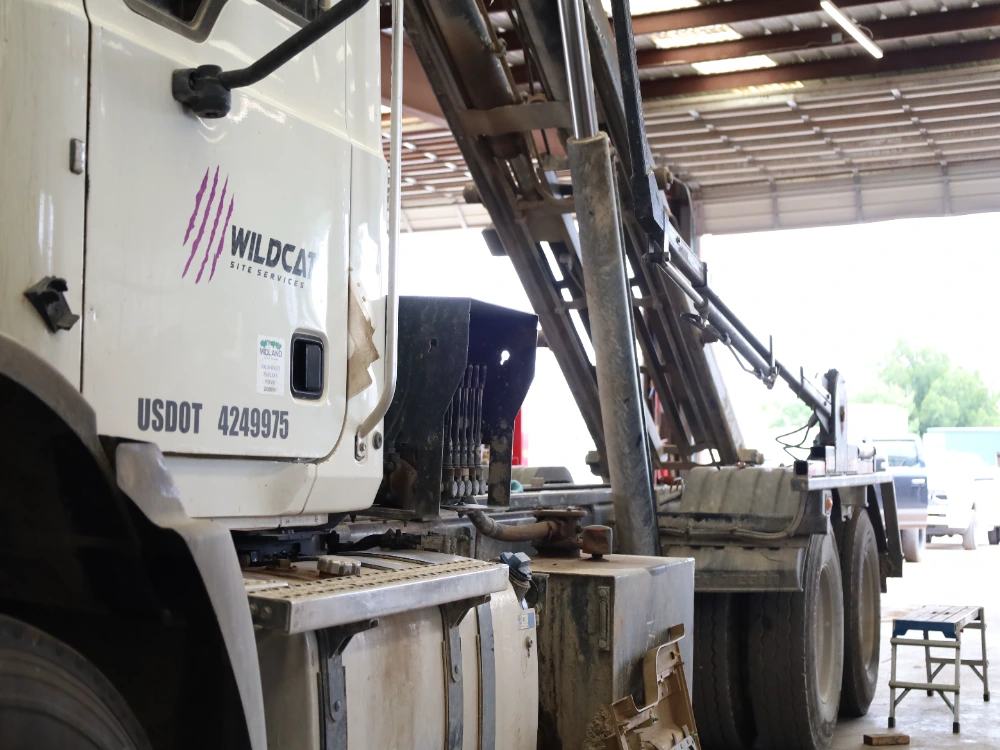
Hoses Built Where the Machine Sits.
Chris and his team run service trucks that carry hose stock, fittings, and a crimper, so a blown line gets measured, built, and installed where the machine sits instead of getting trailered in and losing you a day. Heavier field work, including cylinder removal with the crane, runs through mobile heavy equipment repair, and anything needing a full teardown comes back to the shop.
- Hoses Built in the Field Stock hose and fittings ride on the truck. Most field hose calls are measured, crimped, installed, and cycled in a single visit.
- Over the Counter at the Shop Bring the old hose in and we match length, fittings, and pressure rating at the Midland counter while you wait.
- Midland and Odessa Coverage Hose calls run roughly 100 miles out from Midland, which covers Odessa and most of the working Permian Basin.
- Routed Clear of the Rub Point The replacement gets routed away from whatever killed the last one. A hose that fails twice in the same spot is a routing problem, not a hose problem.
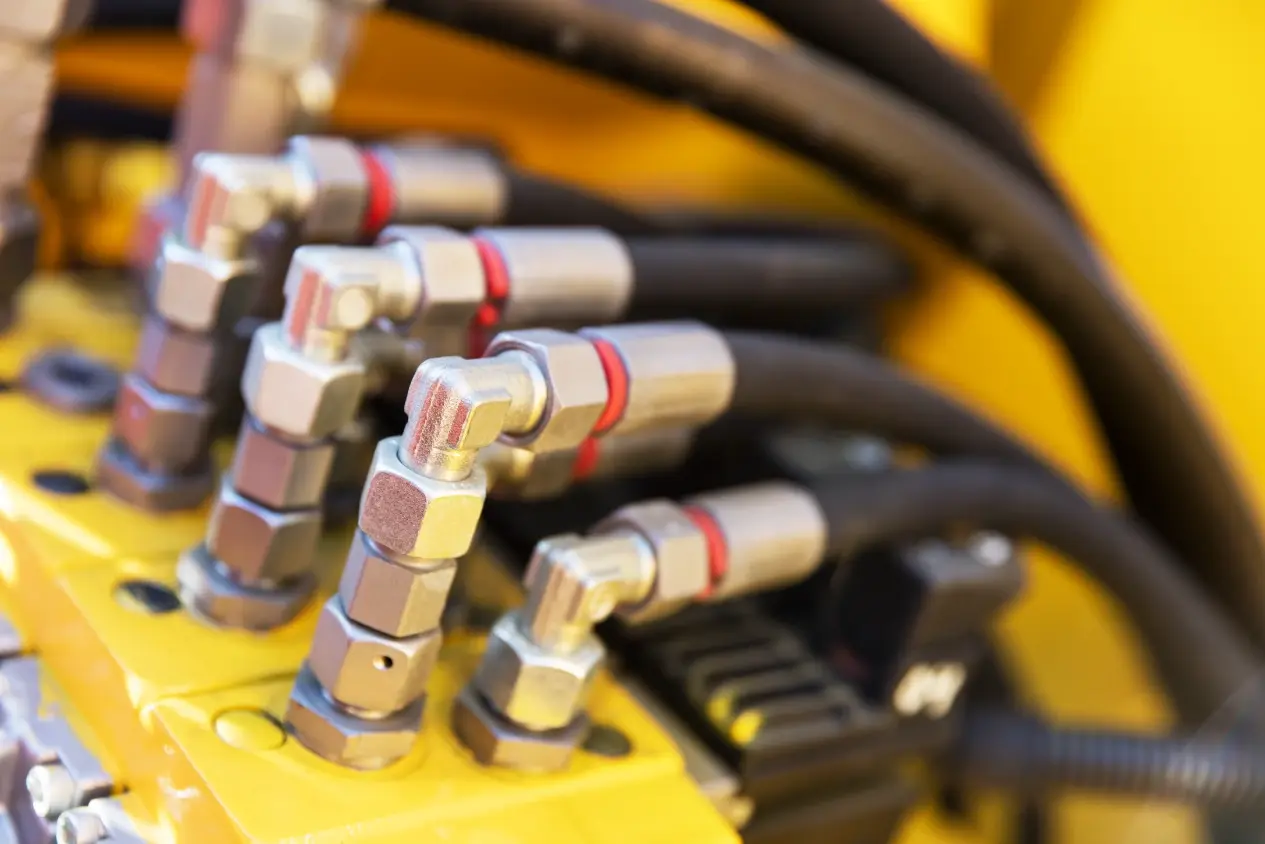
Hydraulics Reward Discipline. And Punish Shortcuts.
A hydraulic system does not forgive dirty oil, misrouted hoses, or reliefs set by feel. Every rule below exists because we have seen what happens when somebody skips it.
- Numbers or Nothing No component is condemned without pressure and flow evidence. A relief valve out of adjustment mimics a dying pump, and the price difference is enormous.
- Rebuilt, Not Just Swapped Cylinders are resealed and rods repaired in house. Pumps and motors are torn down and rebuilt when the internals justify it, so you are not paying for a new unit every time.
- Cleanliness Standard Capped lines, clean fill, filtered transfer, and system flushes after failures. Contamination control is the cheapest reliability money buys.
- All Equipment Types Dozers, excavators, wheel loaders, skid steers, telehandlers, cranes, work trucks, trailers, and oilfield equipment. If it moves oil under pressure, it is in scope.
Common Questions
Can you make hydraulic hoses on site?
How do you know if a hydraulic pump is actually bad?
Do you rebuild hydraulic cylinders or only replace them?
Why does my equipment lose hydraulic power when it gets hot?
My pump failed. Do I really need a system flush?
Do you repair hydraulic jacks and dump bed hoists?
Do you travel to Odessa for hydraulic repair?
What does hydraulic repair cost in Midland, TX?
Weak, Slow, or Leaking?
Get the circuit tested before you buy the expensive part. Hoses built on site, cylinders and pumps rebuilt in house, and pressures verified hot before the machine goes back to work.